The Fix for Dry Skin on Legs Is Mostly Habit
Short, lukewarm showers, gentle soap and a thick cream with urea or lactic acid on damp skin. Cracked, crazy-paving shins deserve a doctor’s look.
By Rachel Moreno · Published
10 sources · Our standards
Straight answer
Dry skin on legs usually comes from a mix of age-related drop in skin oils, low humidity, long hot showers and harsh soap. The fix is mostly habit: shorter warm showers, a gentle cleanser, and a thick cream or ointment applied to damp skin, ideally one with a humectant such as urea, lactic acid or glycerin. Cracked, itchy, crazy-paving skin on the shins, or dryness with swelling or discoloration, deserves a doctor’s look.
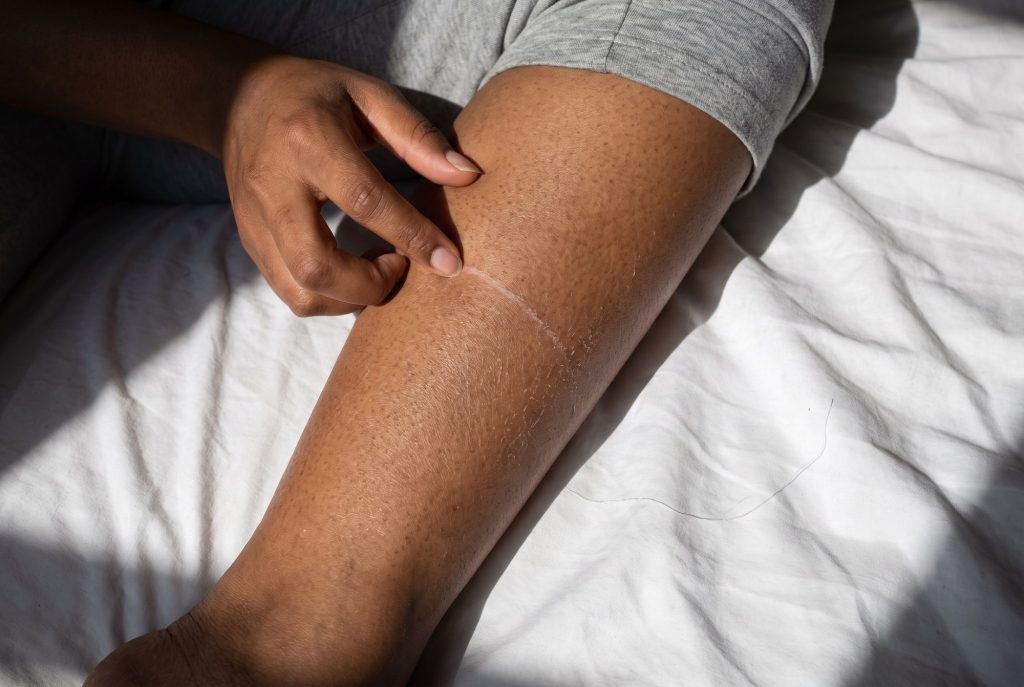
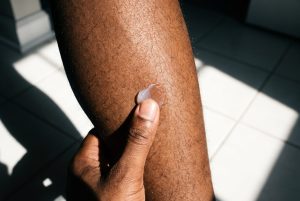
Legs are often the first place dryness shows up and the last place people moisturize. Cleveland Clinic lists the legs among the areas most often affected by dry skin, known medically as xerosis (Cleveland Clinic). On lighter skin, it looks white and flaky; on deeper skin tones it often reads as ashy or gray. Either way, it can itch, crack and catch on tights.
Here’s why dry skin on legs happens, which patterns point to something more than everyday dryness, and the routine that actually fixes it.
Jump to
Why dry skin on legs happens
The outer layer of skin stays soft when it holds enough water and has enough oil on top to keep that water in. Most dry legs are the result of something tipping that balance.
Age and hormones
Oil glands produce less oil as we age. MedlinePlus notes the decline is most pronounced in women after menopause, which makes it harder to keep skin moist and leads to dryness and itchiness (MedlinePlus). Cleveland Clinic puts people 65 and older in the higher-risk group (Cleveland Clinic).
Weather and indoor heat
Dry air pulls water out of skin. Cleveland Clinic points to desert climates and cold, windy ones (Cleveland Clinic), and DermNet adds winter, high altitude, travel and fan heaters to the list of low-humidity triggers (DermNet). Legs that spend winter under heated air and wool are a classic setup.
Showers and soap
Hot water and harsh soap strip the oils that keep skin supple (Cleveland Clinic). The AAD recommends limiting showers and baths to 5 to 10 minutes in warm, not hot, water (AAD). Long, steamy showers feel good in January and show up on your shins a week later.
Shaving
Dragging a blade over dry skin removes surface cells along with hair. The AAD recommends shaving on wet, softened skin with a shaving cream or gel, in the direction the hair grows, and replacing blades after 5 to 7 shaves (AAD).
Health conditions and medicines
Persistent dryness can be a symptom of eczema, psoriasis, diabetes, kidney disease or an underactive thyroid (Cleveland Clinic). DermNet notes that some medications, including diuretics and retinoids, can contribute to the cracked-skin pattern described below (DermNet).
Patterns worth knowing
Skin that looks like snakeskin or crazy paving
When very dry skin on the shins develops a network of fine red cracks around diamond-shaped plates, it has become a form of eczema called asteatotic eczema or eczema craquelé. DermNet describes it as a crazy-paving pattern, most common on the shins of older people, often triggered by low humidity and frequent bathing with soap (DermNet). It needs more than lotion: thick emollients several times a day, a cream cleanser instead of soap, and sometimes a short course of an anti-inflammatory cream that a clinician may suggest.
Scales that look like fish scales
Ichthyosis vulgaris is an inherited condition that causes white, gray or brown scales with curling edges, often on the fronts of the legs. Mild cases can be mistaken for ordinary dry skin, it usually starts in early childhood, and it tends to flare in winter (AAD). If your legs have always been scaly, not just recently, this is worth raising with a dermatologist.
Dryness with swelling or discoloration
Dry, itchy, discolored skin on the lower legs, especially over varicose veins and with ankle swelling by evening, can be stasis dermatitis, which results from poor blood flow in the legs (AAD). That needs medical care, not just moisturizer.
The short list
- Most dry legs come from lower oil production with age, dry air, hot showers, harsh soap and dry shaving.
- Moisturize within minutes of showering, on damp skin, with a cream or ointment rather than a thin lotion.
- Urea, lactic acid and glycerin pull water into skin; petrolatum and dimethicone seal it in.
- Cracked crazy-paving skin on the shins is a type of eczema and needs more intensive care.
- Dryness with leg swelling, discoloration or lifelong scaling deserves a medical opinion.
What your dry legs may be telling you
| What you see | Likely explanation | First step |
|---|---|---|
| White flakes or ashy look, mild itch, worse in winter | Everyday dry skin (xerosis) | Shower changes plus a cream on damp skin |
| Fine red cracks in a crazy-paving pattern on the shins | Asteatotic eczema | Thick emollient several times daily; see a clinician if it doesn’t settle |
| Fish-like scales with curled edges, present since childhood | Ichthyosis vulgaris | Dermatologist for diagnosis and a long-term plan |
| Dry, itchy, discolored skin near varicose veins with ankle swelling | Stasis dermatitis | See a doctor about circulation |
| Dryness all over plus fatigue, weight change or other symptoms | Possible underlying condition | Primary care provider |
Sources: Cleveland Clinic, DermNet, AAD, AAD.
How to fix dry skin on legs
A 2025 review of clinical studies on dry skin concluded that regular, ongoing moisturizer use should be the mainstay of treatment, and that basic formulas are safe and effective for age-related dryness (Szepietowski and Tadini, 2025). Expensive actives are optional. Consistency is not.
Change the shower, not just the lotion
- Keep it to 5 to 10 minutes, warm rather than hot (AAD).
- Use a gentle, fragrance-free cleanser, and only where you need it. Shins rarely need lathering.
- Pat, don’t rub, with the towel.
Moisturize on damp skin
The AAD’s single most useful tip: apply moisturizer while skin is still damp, within minutes of getting out of the shower (AAD). Damp skin holds water, and the moisturizer traps it.
Pick the right texture
According to the AAD, ointments and creams add more moisture than lotions (AAD). For legs that flake by midafternoon, a cream from a tub or a balm is a better bet than a pump lotion. Save lighter lotions for summer or for mornings under clothes.
Look for these ingredients
The AAD lists jojoba oil, dimethicone, glycerin, hyaluronic acid, lactic acid, lanolin, mineral oil, petrolatum and shea butter as ingredients that help dry skin (AAD). They fall into three groups:
- Humectants draw water into skin: glycerin, hyaluronic acid, urea, lactic acid.
- Occlusives seal it in: petrolatum, mineral oil, dimethicone, lanolin.
- Emollients smooth rough spots between cells: shea butter, jojoba and other plant oils.
The best formulas for very dry legs combine at least one from each group. Urea has good data for aging skin: in a small study of people with moderate to severe age-related dryness on the arms or legs, a 10% urea cream applied twice daily significantly improved both dryness and itch within 7 to 14 days, with no stinging reported (Lacarrubba et al., 2021). Higher-strength urea creams act faster on thick, rough skin; in one head-to-head study, a 40% urea cream outperformed 12% ammonium lactate lotion on roughness, cracks and dryness at day 14 (Ademola et al., 2002). Lactic acid and ammonium lactate also loosen built-up flakes while they hydrate; see our guides to lactic acid lotion and ammonium lactate 12%.
Add humidity and soften the fabrics
A humidifier helps in winter, and the AAD suggests loose-fitting cotton clothing, with a cotton or silk layer under rough fabrics such as wool (AAD). Choose fragrance-free products, which the AAD recommends for dry skin.
Go easy on scrubs
Flakes tempt people toward harsh scrubs and stiff brushes. On already dry, cracked skin, that mostly adds irritation. A lotion with lactic acid or urea removes flakes chemically and gently; save physical exfoliation for skin that’s no longer cracked, and keep it light.
A simple daily plan
- Shower: short, warm, gentle cleanser only where needed.
- Within 3 minutes: a urea or lactic acid cream on damp legs, focusing on shins, knees and ankles.
- On cracked or very rough patches: a thin layer of petrolatum or a balm on top at night.
- Mornings with bare legs: sunscreen, especially if you use an acid-based lotion.
- Shaving days: shave at the end of the shower with gel, then moisturize immediately.
Most people see softer, less flaky legs within one to two weeks of doing this daily. If you want to fold this into a full-body plan, our weekly body care routine lays it out, and our guide to crepey skin covers the thin, wrinkled texture that sometimes comes with dry, aging skin.
When to see a dermatologist
Get it looked at if
- dryness doesn’t improve after two to three weeks of consistent care
- itching keeps you up at night or interferes with daily life
- cracks bleed, ooze, or look infected
- you see a red, cracked network on your shins
- your legs swell, feel heavy, or the skin near veins is discolored
- you’ve had scaly legs since childhood or there is a family pattern
Cleveland Clinic advises seeking care when dry skin becomes infected, develops a rash, or itching interferes with sleep or daily activities (Cleveland Clinic).
Frequently asked questions
Why are my legs so dry even though I moisturize?
Timing and texture are the usual culprits. A thin lotion applied to fully dry skin does far less than a cream or ointment applied to damp skin right after a short, warm shower (AAD). If you’re doing all of that and still flaking, check for an underlying cause with your doctor.
Why does the skin on my legs look like snakeskin?
Very dry skin on the shins can crack into a diamond-shaped, crazy-paving pattern called asteatotic eczema. It’s common in older adults and in winter, and it responds to thick emollients and gentler washing (DermNet). A fish-scale pattern present since childhood suggests ichthyosis vulgaris (AAD).
What is the best lotion for extremely dry legs?
Rather than a specific brand, look for a cream or ointment that combines a humectant such as urea, lactic acid or glycerin with an occlusive such as petrolatum or dimethicone, and is fragrance-free (AAD). Urea has good evidence for age-related dryness (Lacarrubba et al.).
Can dry skin on legs be a sign of something serious?
Usually not, but it can accompany diabetes, kidney disease or thyroid problems (Cleveland Clinic), and dryness with swelling and discoloration can signal poor circulation (AAD).
Is body oil or cream better for dry legs?
Oils such as jojoba are good emollients and appear on the AAD’s list of helpful ingredients, but most oils don’t pull water into skin the way humectants do (AAD). A practical approach for very dry legs is to apply a humectant cream to damp skin and, if you like the feel, press a few drops of oil on top to seal it. On its own, a thick cream usually outperforms oil alone.
Does dry skin on legs get worse with age?
Often, yes. Oil production declines with age, especially after menopause, and adults 65 and older are at higher risk of dry skin (MedlinePlus; Cleveland Clinic). That’s why a routine that worked at 35 may need a richer moisturizer at 55.
About the author
Rachel Moreno writes Body Skin Insider's guides to crepey skin, discoloration, dry skin and the ingredients that help, with a focus on the skin below the chin. Each guide lists its sources and spells out when a spot or change should be seen by a dermatologist.
How we put this together
10 sources went into this guide, including the American Academy of Dermatology, Cleveland Clinic and peer-reviewed studies. Claims link straight to the source that backs them.
This guide doesn’t link to any product our publisher sells.
Sources
- American Academy of Dermatology. “Dermatologists’ top tips for relieving dry skin.” AAD. aad.org
- Cleveland Clinic. “Dry Skin.” Cleveland Clinic. my.clevelandclinic.org
- DermNet. “Asteatotic eczema.” DermNet. dermnetnz.org
- American Academy of Dermatology. “Ichthyosis vulgaris: Signs and symptoms.” AAD. aad.org
- Szepietowski JC, Tadini G. “Basic Emollients for Xerosis Cutis Not Associated With Atopic Dermatitis: A Review of Clinical Studies.” International Journal of Dermatology, 2025. pubmed.ncbi.nlm.nih.gov
- Lacarrubba F, Verzì AE, Dinotta F, Micali G. “10% urea cream in senile xerosis: Clinical and instrumental evaluation.” Journal of Cosmetic Dermatology, 2021. pubmed.ncbi.nlm.nih.gov
- Ademola J, Frazier C, Kim SJ, et al. “Clinical evaluation of 40% urea and 12% ammonium lactate in the treatment of xerosis.” American Journal of Clinical Dermatology, 2002. pubmed.ncbi.nlm.nih.gov
- U.S. National Library of Medicine. “Aging changes in skin.” MedlinePlus Medical Encyclopedia. medlineplus.gov
- American Academy of Dermatology. “Stasis dermatitis: Signs and symptoms.” AAD. aad.org
- American Academy of Dermatology. “Hair removal: How to shave.” AAD. aad.org
General information, not medical advice. For a spot that’s new, changing or bleeding, see a dermatologist.