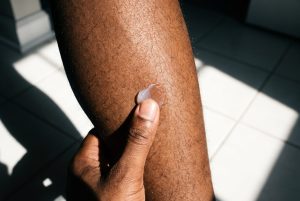
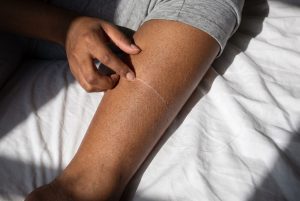
Dry Skin on Your Legs That Looks Like Snakeskin
Plate-like cracks on the shins usually mean severe dryness or eczema. Two weeks of soap-free washing and a thick urea cream improve most legs.
By Rachel Moreno · Published
11 sources · Our standards
Straight answer
When dry skin on legs looks like snakeskin, the usual explanation is severe dryness (xerosis) that has started to crack into plates, a pattern called asteatotic eczema when the cracks turn red. Less often it’s ichthyosis vulgaris, an inherited condition with fish-like scales, or, if it appears for the first time in adulthood, acquired ichthyosis, which can signal an internal illness. Most snakeskin legs improve within two weeks of soap-free washing and a thick urea or lactic acid cream used daily.
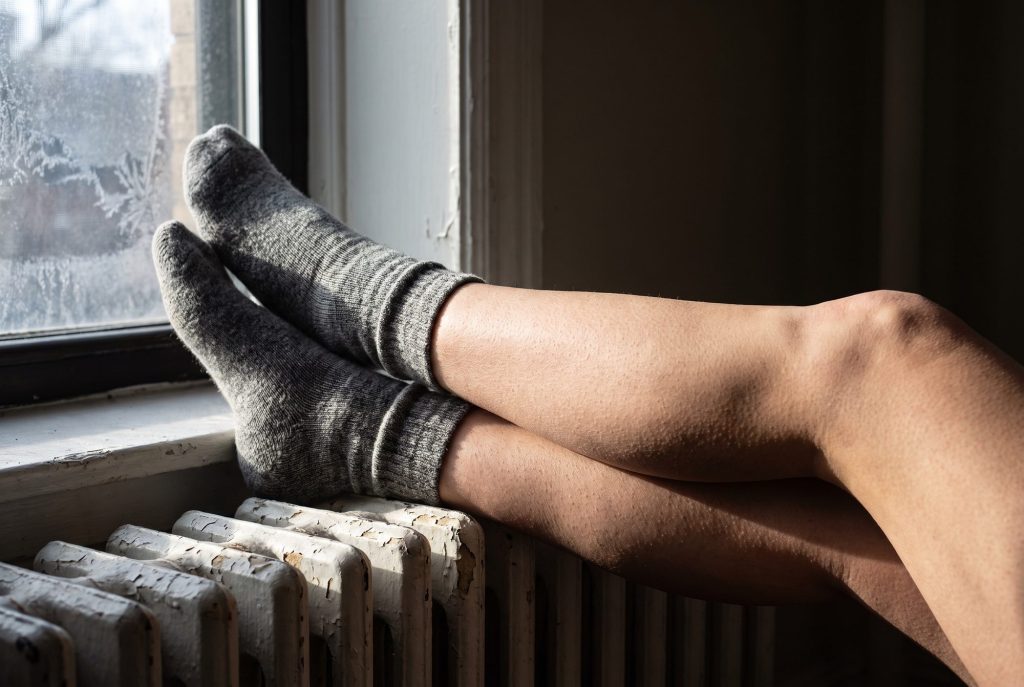
Snakeskin legs have a recognizable look: the shins break into small, flat plates separated by fine lines, sometimes white and flaky, sometimes outlined in red. It’s most common in older adults and in winter, and it often itches.
Our guide to dry skin on legs covers everyday dryness. This article goes further into the scaly, cracked pattern: what each version means, how to tell them apart, and a plan that works.
Jump to
Four reasons dry skin on legs looks like snakeskin
1. Severe xerosis
Plain dry skin, just a lot of it, lifting into fine scales that catch the light. Cleveland Clinic lists age, dry or cold climates, and conditions such as eczema, diabetes and kidney disease among the causes (Cleveland Clinic). A 2024 panel of dermatologists described age-related dryness as highly prevalent in people over 50 and proposed calling it “mature xerosis,” noting that the moisturizers and gentle cleansers that treat it are underused (Fluhr et al., 2024).
2. Asteatotic eczema (eczema craquelé)
When very dry skin cracks and the cracks become inflamed, it turns into a form of eczema. DermNet describes it as diamond-shaped plates of skin separated by red bands forming a network, a crazy-paving pattern most common on the shins of older people (DermNet). Triggers include low humidity, frequent bathing, and soaps or detergents. Systemic factors such as an underactive thyroid, malnutrition, severe weight loss and, rarely, lymphoma can contribute, as can some medicines, including diuretics and oral retinoids (DermNet).
3. Ichthyosis vulgaris
This inherited condition causes white, gray or brown scales with curled edges, usually on the fronts of the legs and backs of the arms, while sparing the armpits and the creases behind the knees. According to the AAD, it usually starts between ages 3 and 5, is often mistaken for dry skin, and tends to worsen in winter and improve in humid weather (AAD). DermNet notes that ichthyosis vulgaris accounts for about 95% of inherited ichthyosis cases (DermNet). If your legs have always been scaly, this is the likely candidate.
4. Acquired ichthyosis
This is the one not to ignore. Ichthyosis that appears for the first time in adulthood is uncommon, and it can be a marker of internal disease. Reported associations include Hodgkin lymphoma and other cancers, sarcoidosis, an underactive thyroid, chronic kidney failure, nutritional deficiencies and HIV infection, as well as certain medications (Schwartz and Williams, 1984; DermNet). New, widespread fish-like scaling in an adult who never had it before deserves a medical evaluation.
The short list
- Fine white scales on the shins that come and go with the seasons are usually severe dryness.
- Red cracks outlining diamond-shaped plates point to asteatotic eczema, which needs more than lotion.
- Scaly legs since childhood suggest ichthyosis vulgaris, a lifelong but manageable condition.
- Fish-like scaling that appears for the first time in adulthood should be checked by a doctor.
How to tell them apart
| Pattern | Typical look | Onset and course | First step |
|---|---|---|---|
| Severe xerosis | Fine white or ashy scales, tight feeling, mild itch | Older adults, worse in winter | Soap-free washing plus thick cream daily |
| Asteatotic eczema | Diamond-shaped plates outlined by red or dark cracks; itchy, sometimes sore | Older adults, dry air, frequent bathing | Thick emollient several times a day; see a clinician if it doesn’t settle |
| Ichthyosis vulgaris | White, gray or brown scales with curled edges on shins and backs of arms; creases spared | Begins in early childhood, lifelong, worse in winter | Dermatologist for diagnosis; urea or lactic acid creams long term |
| Acquired ichthyosis | Similar scaling, often widespread | New in adulthood | Medical evaluation for an underlying cause |
Color varies with skin tone. Cleveland Clinic notes that dry skin may look lighter or darker than your usual skin tone, or red to purple (Cleveland Clinic), so on deeper skin the cracks of eczema craquelé may read as dark rather than red.
A two-week plan for snakeskin legs
For xerosis and mild asteatotic eczema, the fix is consistent and unexciting. DermNet’s advice for asteatotic eczema is to bathe less often, swap soap for a cream cleanser, apply a thick emollient such as petroleum jelly several times a day, and avoid direct heat (DermNet). It also notes the condition usually responds quickly but is very likely to return if the skin dries out again.
In the shower
- Keep it to 5 to 10 minutes in warm, not hot, water, as the AAD recommends (AAD).
- Skip soap on the legs. A fragrance-free cream cleanser or plain water is enough for shins.
- Pat dry. Don’t scrub the scales off.
Within a few minutes of getting out
- Apply a thick cream to damp legs. The AAD recommends moisturizing damp skin right after bathing and choosing ointments or creams over lotions (AAD).
- For heavy scaling, use a cream with urea or lactic acid. A systematic review of 81 publications found urea effective for dry, scaly conditions including xerosis and ichthyosis, with mild irritation as the most common side effect (Pan et al., 2013). The AAD also lists urea and lactic acid among ingredients to look for in ichthyosis vulgaris (AAD).
- On cracked spots, add a thin layer of petroleum jelly on top.
The rest of the day
- Reapply moisturizer once more, ideally before bed.
- Run a humidifier in the bedroom in dry months (AAD).
- Wear soft fabrics against the legs; the AAD suggests cotton or silk under rough fabrics like wool (AAD).
- If you use a lactic acid product, protect bare legs from the sun. The FDA advises sun protection while using alpha hydroxy acids and for a week afterward (FDA).
What about exfoliating?
Resist the urge to scrub. Gentle physical exfoliation can help with true ichthyosis: the AAD suggests gently rubbing softened scale with a soft sponge or pumice stone shortly after bathing, then moisturizing right away (AAD). On red, cracked eczema craquelé, though, scrubbing adds irritation. Let urea or lactic acid loosen scale chemically instead. Our guides to lactic acid lotion and ammonium lactate 12% explain those options.
If the red cracks don’t calm down within a week or two, a clinician may suggest a short course of an anti-inflammatory cream; DermNet notes that a mild topical steroid is often used initially (DermNet).
When to see a dermatologist
Get it looked at if
- the cracks are red, sore, weeping or bleeding, or the redness is spreading
- itching keeps you awake
- there’s no clear improvement after two weeks of the plan above
- scaling appeared for the first time as an adult, especially alongside other new symptoms
- your legs have been scaly since childhood and you’ve never had a diagnosis
- the dry, scaly skin comes with ankle swelling or discoloration over varicose veins
That last pattern can be stasis dermatitis, which the AAD describes as itchy, dry, discolored skin on the lower legs, often over varicose veins, with ankle swelling that improves overnight (AAD). It’s a circulation problem that needs medical care.
Frequently asked questions
Why does the skin on my legs look like snakeskin?
Usually because it’s very dry and has cracked into small plates. If the cracks are red and itchy, it’s likely asteatotic eczema, which is common on the shins of older adults (DermNet). Lifelong scaling suggests ichthyosis vulgaris (AAD).
Is snakeskin on the legs serious?
Most of the time, no. It’s a sign the skin barrier needs help. Scaling that appears for the first time in adulthood, especially widespread fish-like scales, can be linked to conditions such as thyroid disease, kidney failure or lymphoma, and needs a doctor’s evaluation (Schwartz and Williams, 1984).
What is the best lotion for snakeskin legs?
Look for a cream rather than a thin lotion, with urea or lactic acid to loosen scale and petrolatum or dimethicone to seal in water (Pan et al., 2013; AAD). Fragrance-free is best.
How long does it take to fix snakeskin legs?
Asteatotic eczema usually responds quickly to emollients and gentler washing, often within a week or two, but it tends to return if the skin dries out again (DermNet). Ichthyosis vulgaris needs ongoing care, especially in winter.
Should I scrub off the scales?
Not if the skin is red or cracked. For ichthyosis, the AAD suggests gently rubbing softened scale with a soft sponge or pumice stone right after bathing (AAD); for eczema craquelé, let a urea or lactic acid cream do the work instead.
About the author
Rachel Moreno writes Body Skin Insider's guides to crepey skin, discoloration, dry skin and the ingredients that help, with a focus on the skin below the chin. Each guide lists its sources and spells out when a spot or change should be seen by a dermatologist.
How we put this together
We built this guide from 11 sources, including DermNet, the American Academy of Dermatology and peer-reviewed studies. Key claims link to the source that supports them.
Sources
- DermNet. “Asteatotic eczema.” DermNet. dermnetnz.org
- Fluhr JW, Alexis AF, Andriessen A, et al. “A global perspective on the treatment and maintenance of mature skin using gentle cleansers and moisturizers.” International Journal of Dermatology, 2024. pubmed.ncbi.nlm.nih.gov
- American Academy of Dermatology. “Ichthyosis vulgaris: Signs and symptoms.” AAD. aad.org
- American Academy of Dermatology. “Ichthyosis vulgaris: Diagnosis and treatment.” AAD. aad.org
- DermNet. “Ichthyosis.” DermNet. dermnetnz.org
- Schwartz RA, Williams ML. “Acquired ichthyosis: a marker for internal disease.” American Family Physician, 1984. pubmed.ncbi.nlm.nih.gov
- Pan M, Heinecke G, Bernardo S, et al. “Urea: a comprehensive review of the clinical literature.” Dermatology Online Journal, 2013. pubmed.ncbi.nlm.nih.gov
- American Academy of Dermatology. “Dermatologists’ top tips for relieving dry skin.” AAD. aad.org
- U.S. Food and Drug Administration. “Alpha Hydroxy Acids.” FDA. fda.gov
- Cleveland Clinic. “Dry Skin.” Cleveland Clinic. my.clevelandclinic.org
- American Academy of Dermatology. “Stasis dermatitis: Signs and symptoms.” AAD. aad.org
General information, not medical advice. For a spot that’s new, changing or bleeding, see a dermatologist.