Affordable Body Care: Where to Spend and Where to Save
Plain petrolatum or glycerin moisturizers do the job as well as luxury jars, so save there and spend on a body sunscreen you’ll use every day.
By Rachel Moreno · Published
11 sources · Our standards
Straight answer
For body care, affordable skin care products cover most needs as well as expensive ones. Dermatologists say effective products exist at every price, and basic moisturizers with petrolatum, glycerin or similar ingredients are proven for dry skin. Spend where quantity and consistency matter (a body sunscreen you’ll apply generously every day) and on one targeted active if you have a specific concern. Save on cleansers, plain moisturizers, scrubs and anything sold mainly on “firming” or luxury claims.
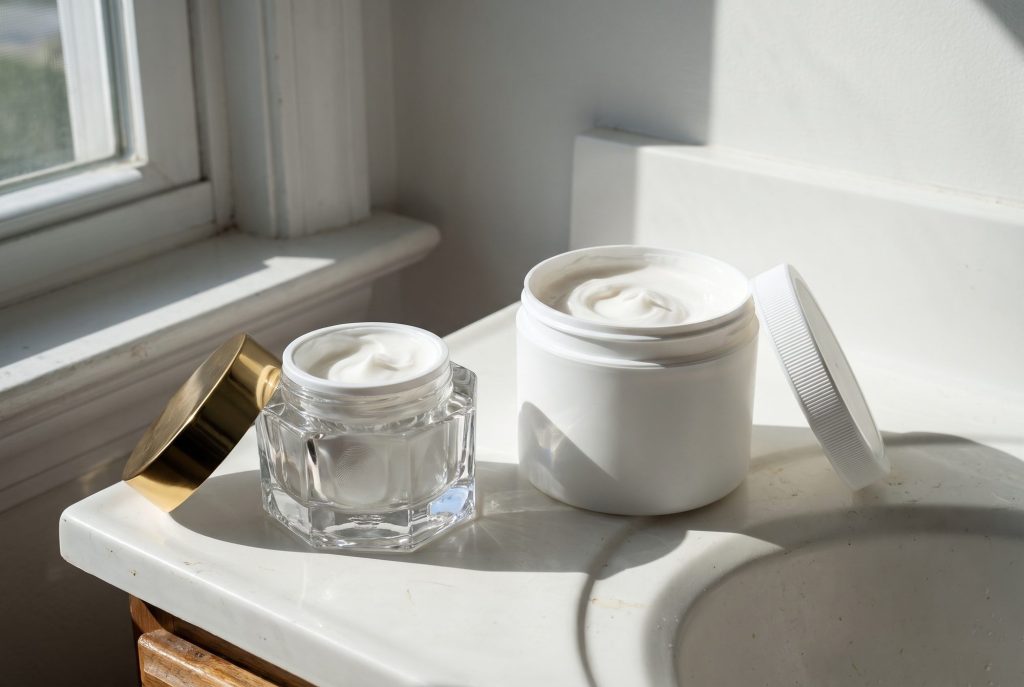
Body care is a volume business. Your legs alone cover far more skin than your face, and a body sunscreen used properly disappears fast. That changes the math: a face serum is used by the drop, a body cream by the handful.
The good news is that body skin rarely needs expensive products, and affordable skin care products cover most of what it does need. Here’s where money makes a difference, and where it mostly buys packaging and fragrance.
Jump to
Does price predict results?
Not much. The AAD states plainly that effective products are available at all price ranges, and that sunscreen and moisturizer are the two most effective anti-aging products you can buy (AAD).
The best data on body moisturizer pricing comes from a 2017 *JAMA Dermatology* study of 174 best-selling whole-body moisturizers from Amazon, Target and Walmart. Prices ranged from $0.10 to $9.51 per ounce, a spread of 9,400%, with a median of $0.59 (Xu et al., 2017). A few more findings:
- Products labeled “dermatologist recommended” cost more per ounce (median $0.79) than those without the claim ($0.59).
- Lotions were the cheapest format (median $0.49 per ounce), compared with creams ($0.80), butters ($1.20) and oils ($1.30).
- Of products labeled “fragrance free,” 45% contained at least one fragrance cross-reactor or botanical ingredient.
- Only 12% of the products were free of common contact allergens, and allergen-free products were not significantly more expensive.
The authors noted the lack of readily available data comparing moisturizer effectiveness (Xu et al., 2017). In other words, price tracks marketing claims and texture more than proven performance.
The short list
- Effective body care exists at every price point; sunscreen and moisturizer do the most work.
- Basic moisturizers with ingredients like petrolatum, glycerin, urea or lactic acid are proven for dry skin.
- Spend on sunscreen you’ll actually apply generously, and on one active ingredient for a specific concern.
- Save on cleansers, scrubs, “firming” creams and products sold on fragrance or luxury.
Where to save: affordable skin care products that work
Basic moisturizer
This is the clearest case for saving. A 2025 review of clinical studies on dry skin concluded that most basic emollient formulas are safe and effective for age-related dryness and dry skin linked to other conditions, called them safe and cost-effective for long-term use, and said regular, ongoing use should be the mainstay of treatment (Szepietowski and Tadini, 2025). The ingredients studied include everyday staples: glycerol (glycerin), petrolatum, paraffin, lanolin, urea, lactic acid, hyaluronic acid and vegetable oils.
The AAD’s list of helpful ingredients for dry skin reads like the label of a drugstore tub: jojoba oil, dimethicone, glycerin, hyaluronic acid, lactic acid, lanolin, mineral oil, petrolatum and shea butter (AAD). Buy the biggest container that suits your texture preference; see body lotion, cream or oil for which to pick.
Petroleum jelly
An inexpensive staple, and the AAD recommends it for dry skin, chafing on the thighs and other uses (AAD). For cracked heels, elbows and shins, a thin layer at night is hard to beat for the price.
Body wash and soap
Cleanser stays on your skin for seconds. A gentle, fragrance-free formula is all you need, and the AAD advises fragrance-free products for dry skin (AAD). Paying more for a fragranced wash mostly buys fragrance; in the best-selling moisturizer study, fragrance mix was the most common potential allergen (Xu et al., 2017).
Scrubs and gadgets
Sugar scrubs, brushes and mitts are optional. A soft washcloth works for most people, and a lactic acid lotion exfoliates without rubbing; see our lactic acid lotion guide.
Firming and “anti-aging” body creams
The AAD says firming creams give subtle results at best, plumping skin temporarily like a moisturizer, and cannot penetrate deeply enough to lift sagging skin (AAD). The NIA advises skepticism toward anti-aging claims, noting that many such products are cosmetics that aren’t required to be tested in humans or approved by the FDA before sale (NIA). If you want an anti-aging body product, pay for a proven ingredient, not a promise.
Where to spend
Body sunscreen you’ll use generously
Sunscreen is the one product where skimping on quantity undercuts the whole point. The FDA and AAD both say an adult needs about one ounce, roughly a shot glass full, to cover the body (FDA; AAD), and a review of real-world use found people typically apply well under the amount used in SPF testing, which considerably lowers protection (Petersen and Wulf, 2014).
So spend on a broad-spectrum, water-resistant SPF 30+ (AAD) with a texture you like enough to use every day, in a size that lets you apply it generously. A $15 bottle you use up is worth more than a $40 bottle you ration. In the US, sunscreens are regulated as over-the-counter drugs (FDA), so even inexpensive ones carry a standardized Drug Facts label.
One targeted active
If you have a specific concern, one evidence-based active is worth paying for: a retinoid for crepey texture, a lactic acid or urea lotion for rough, flaky skin, or an ingredient such as azelaic acid or niacinamide for discoloration. The AAD suggests mastering the basics first, then adding one product aimed at your main concern (AAD). Our guides to crepey skin on arms and hyperpigmentation on legs cover what works.
Formulas for sensitive or allergy-prone skin
If you react to products, spending a bit more time (not necessarily money) on labels pays off. The *JAMA Dermatology* study found that allergen-free moisturizers weren’t significantly more expensive, but they were rare (Xu et al., 2017).
Spend or save: a quick guide
| Category | Spend or save | Why |
|---|---|---|
| Body sunscreen | Spend (on quantity and a texture you’ll use) | You need about an ounce per full-body application, daily |
| One targeted active (retinoid, lactic acid, urea) | Spend moderately | Proven ingredients for specific concerns |
| Basic moisturizer | Save | Basic emollients are proven, safe and cost-effective |
| Petroleum jelly | Save | Inexpensive and recommended by the AAD for dry skin and chafing |
| Body wash | Save | Brief contact; fragrance-free and gentle is enough |
| Scrubs and tools | Save or skip | Optional; chemical exfoliants avoid friction |
| Firming creams | Skip, or buy only for a proven active | Results subtle at best per the AAD |
| “Dermatologist recommended” claims | Don’t pay extra for the label | Associated with higher prices, not proven performance |
Sources: AAD, Xu et al., 2017, Szepietowski and Tadini, 2025, AAD.
How to read a label like a dermatologist
- Cosmetic or drug? The FDA defines cosmetics as products meant to cleanse or beautify, and drugs as products meant to treat or prevent disease or affect the body’s structure or function. Some products are both, such as a moisturizer with sunscreen. Cosmetics don’t need FDA approval before sale; drugs do, or must follow over-the-counter rules (FDA). A Drug Facts box means the active ingredient and its strength are listed.
- “Fragrance free” vs. “unscented.” The AAD recommends fragrance-free products and notes that “unscented” products may contain chemicals that mask odors (AAD). Even “fragrance free” labels aren’t a guarantee, according to the 2017 study (Xu et al., 2017).
- Look for the workhorse ingredients near the top of the list: glycerin, petrolatum, dimethicone, urea, lactic acid.
- Compare price per ounce, not price per bottle.
When to see a dermatologist
Get it looked at if
- you’ve tried consistent basic care for several weeks and skin is still dry, itchy or rough
- products regularly cause redness, itching or a rash
- you’re considering a costly procedure or product for loose or crepey skin and want an honest opinion first
A dermatologist visit can save money in the long run by steering you away from products that won’t work for your skin.
Frequently asked questions
Are affordable skin care products as good as expensive ones?
Not necessarily. The AAD says effective products exist at all price ranges (AAD), and a review of clinical studies found basic emollients safe, effective and cost-effective for dry skin (Szepietowski and Tadini, 2025).
What body care products are worth splurging on?
Sunscreen you’ll apply generously every day, and one evidence-based active for a specific concern, such as a retinoid or lactic acid lotion (AAD; AAD).
Is drugstore sunscreen as good as expensive sunscreen?
In the US, sunscreens are regulated as over-the-counter drugs, and broad-spectrum products with SPF 15 or higher can claim to help prevent skin cancer and early aging (FDA). Price matters less than using enough and reapplying.
Does “dermatologist recommended” mean a product is better?
Not on its own. In the 2017 *JAMA Dermatology* study, products with that claim cost more per ounce, but the authors noted there’s little comparative data on moisturizer effectiveness (Xu et al., 2017).
What’s the cheapest effective moisturizer ingredient?
Petrolatum (petroleum jelly) is inexpensive and recommended by the AAD for dry skin (AAD). In the 2017 study, lotions were also the cheapest moisturizer format per ounce (Xu et al., 2017).
About the author
Rachel Moreno writes Body Skin Insider's guides to crepey skin, discoloration, dry skin and the ingredients that help, with a focus on the skin below the chin. Each guide lists its sources and spells out when a spot or change should be seen by a dermatologist.
How we put this together
We built this guide from 11 sources, including the American Academy of Dermatology, the FDA and peer-reviewed studies. Key claims link to the source that supports them.
Sources
- Xu S, Kwa M, Lohman ME, et al. “Consumer Preferences, Product Characteristics, and Potentially Allergenic Ingredients in Best-selling Moisturizers.” JAMA Dermatology, 2017. pubmed.ncbi.nlm.nih.gov
- American Academy of Dermatology. “How to select anti-aging skin care products.” AAD. aad.org
- Szepietowski JC, Tadini G. “Basic Emollients for Xerosis Cutis Not Associated With Atopic Dermatitis: A Review of Clinical Studies.” International Journal of Dermatology, 2025. pubmed.ncbi.nlm.nih.gov
- National Institute on Aging. “Skin Care and Aging.” NIA, National Institutes of Health. nia.nih.gov
- U.S. Food and Drug Administration. “Is It a Cosmetic, a Drug, or Both? (Or Is It Soap?)” FDA. fda.gov
- U.S. Food and Drug Administration. “Sunscreen: How to Help Protect Your Skin from the Sun.” FDA. fda.gov
- American Academy of Dermatology. “How to apply sunscreen.” AAD. aad.org
- Petersen B, Wulf HC. “Application of sunscreen: theory and reality.” Photodermatology, Photoimmunology & Photomedicine, 2014. pubmed.ncbi.nlm.nih.gov
- American Academy of Dermatology. “Dermatologists’ top tips for relieving dry skin.” AAD. aad.org
- American Academy of Dermatology. “5 ways to use petroleum jelly for skin care.” AAD. aad.org
- American Academy of Dermatology. “Many ways to firm sagging skin.” AAD. aad.org
General information, not medical advice. For a spot that’s new, changing or bleeding, see a dermatologist.