Dark Inner Thighs Usually Start With Friction
Skin rubbing on skin, plus sweat and heat, leaves pigment behind. Anti-chafe habits and gentle azelaic acid or niacinamide help it fade over months.
By Rachel Moreno · Published
12 sources · Our standards
Straight answer
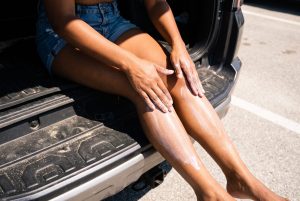
Dark inner thighs are most often caused by friction: skin rubbing against skin or clothing, plus sweat and heat, triggers low-grade inflammation that leaves extra pigment behind. Less often the cause is acanthosis nigricans (linked to insulin resistance), a skin infection, or irritation from shaving or products. Reducing friction, treating any rash and using gentle ingredients such as azelaic acid, niacinamide or vitamin C can help the discoloration fade over months.

Darker skin between the thighs is extremely common, and on its own it isn’t harmful. It tends to be more noticeable on medium and deep skin tones, where any inflammation is more likely to leave a lasting mark. It’s also one of the most aggressively marketed “problems” in body care, with promises to fix it in a week. That isn’t how pigment works.
Here’s what’s usually behind it, how to tell the harmless causes from the ones worth a doctor’s visit, and what gentle care looks like. For similar changes elsewhere, see our guides to dark underarms and hyperpigmentation on legs.
Jump to
What causes dark inner thighs
Friction and chafing
This is the most common driver. A 2023 review of friction-related skin conditions describes how repetitive rubbing can cause thickening, darkening, redness, scaling and cracking of the skin (Arora et al., 2023). The inner thighs rub with every step, and heat, sweat and snug clothing add to it. Over months, the skin there can become slightly thicker, rougher and darker.
Post-inflammatory hyperpigmentation
Any inflammation in the area can leave dark marks behind as it heals: a chafing rash, razor irritation, an infection, an allergic reaction to a product. This is called post-inflammatory hyperpigmentation (PIH). A review in the Journal of Clinical and Aesthetic Dermatology notes that PIH affects people with darker skin more often and more severely, and that treatment starts with managing the underlying inflammation (Davis and Callender, 2010). The AAD lists irritating skin and hair products among the triggers (AAD).
Intertrigo
When friction combines with trapped moisture, skin folds can develop intertrigo, an inflammatory rash that Cleveland Clinic describes as a somewhat symmetrical red or reddish-brown rash, sometimes with small bumps, itching or burning. The inner thighs and groin are common sites, and people with obesity, diabetes or heavy sweating are at higher risk (Cleveland Clinic). Untreated intertrigo can become infected with yeast or bacteria, and the inflammation itself can leave pigment behind.
Acanthosis nigricans
This one matters medically. The AAD describes acanthosis nigricans as brown or black skin that feels velvety and thicker than the skin around it, often in friction-prone areas such as the groin, armpits and neck, sometimes with skin tags, itch or odor (AAD). Its most common cause is obesity, and it’s associated with prediabetes and type 2 diabetes, as well as polycystic ovary syndrome, thyroid disease and some medications (AAD). The AAD notes that significant weight loss often improves the skin, and that it develops slowly over months or years. Sudden, rapidly spreading acanthosis nigricans needs prompt medical attention (AAD).
Infections
Two common skin infections can leave the groin and upper inner thighs discolored. Jock itch is a fungal infection that the AAD describes as a red, scaly, very itchy rash on the genitals, inner thighs and buttocks (AAD). Erythrasma is a bacterial infection that DermNet describes as well-defined discolored patches with fine scaling in skin folds, including the groin; it’s more common in people with diabetes, obesity or heavy sweating, and it often recurs (DermNet).
Hair removal and products
Shaving against the grain with a dull blade irritates skin. Scented washes, wipes and sprays can cause allergic reactions in the groin area, according to the AAD (AAD). Both create the kind of inflammation that can leave pigment behind.
The short list
- Most inner-thigh darkening comes from friction and the inflammation it causes, and it’s harmless.
- Velvety, thickened dark skin can be acanthosis nigricans, which is linked to insulin resistance. Get it checked.
- An itchy, scaly or well-defined patch may be an infection that needs treatment before the color can fade.
- Reduce friction first. Fading products work slowly and won’t keep up if the rubbing continues.
Comparing the common causes
| Cause | What it looks and feels like | What helps |
|---|---|---|
| Friction / chafing | Gradual darkening, sometimes rough or slightly thickened; worse with heat and exercise | Anti-chafing barriers, looser or moisture-wicking clothing, gentle fading ingredients |
| Post-inflammatory hyperpigmentation | Flat brown or gray marks after a rash, razor irritation or infection | Treat the trigger, sun protection where exposed, patience |
| Intertrigo | Red or reddish-brown, itchy or burning rash in the fold; may crack | Keep dry, barrier cream; see a clinician if it persists or looks infected |
| Acanthosis nigricans | Velvety, thickened, dark skin, often also on the neck or underarms | Medical evaluation for insulin resistance and other causes |
| Jock itch | Itchy, scaly rash with a raised border spreading from the groin | Antifungal care; see a clinician if it doesn’t clear |
| Erythrasma | Well-defined discolored patches with fine scale in folds | Diagnosis and treatment from a clinician; often recurs |
Sources: Cleveland Clinic, AAD, AAD, DermNet, Davis and Callender, 2010.
Gentle care that helps
1. Cut the friction
Nothing else works for long if the rubbing continues. The AAD recommends applying petroleum jelly to chafe-prone areas such as the thighs (AAD), and wearing loose-fitting, moisture-wicking fabrics like nylon or polyester during exercise, since tight clothing rubs and irritates (AAD). On non-workout days, bike shorts or slip shorts under skirts and dresses keep skin from rubbing on skin.
2. Keep the area dry and calm
Cleveland Clinic’s prevention advice for intertrigo is to keep folds dry and clean, choose breathable fabrics, and use barrier creams containing zinc oxide or petrolatum (Cleveland Clinic). After workouts, the AAD recommends showering promptly and changing into clean clothes (AAD). Pat dry rather than rubbing.
3. Remove hair gently
If you shave, follow the AAD’s basics: shave wet skin, use a shaving cream or gel, go in the direction of hair growth, rinse the blade after each swipe and replace it after five to seven shaves (AAD). If shaving consistently leaves bumps or a rash, it may be worth trying a different method.
4. Skip the fragrance
Scented washes, sprays and wipes can cause allergic reactions in the groin area (AAD). A plain, fragrance-free cleanser is enough.
5. Add a fading ingredient, slowly
Once the skin is calm, ingredients that interrupt pigment production can help discoloration fade. The AAD lists azelaic acid, glycolic acid, kojic acid, retinoids such as retinol, and vitamin C among options for dark spots in darker skin tones (AAD), and a review of PIH treatments adds niacinamide, licorice extract, arbutin and soy (Davis and Callender, 2010). The same review warns that irritation can worsen PIH (Davis and Callender, 2010), which matters on skin that is already being rubbed all day.
Practical rules: patch test first, use one active at a time, apply it to clean, dry skin at night, and stop if it stings or burns, as the AAD advises (AAD).
6. Set a realistic timeline
According to the AAD, discoloration a few shades darker than your natural skin tone typically takes 6 to 12 months to fade, and deeper discoloration can take years (AAD). “Results in a week” claims are marketing.
What to avoid
- Scrubbing. Harsh exfoliation adds friction and inflammation, the two things that caused the problem.
- Imported or unlabeled “fade” creams. The FDA warns that over-the-counter skin products containing hydroquinone or mercury are not FDA approved, and that they can cause rashes, swelling and ochronosis, a lasting darkening of the skin. It advises checking labels for mercury compounds listed as mercurous chloride or calomel (FDA).
- Liquid bleach, which the AAD specifically says never to apply to skin (AAD).
When to see a dermatologist
Get it looked at if
- the dark skin feels velvety or thick, or also appears on your neck or underarms
- the darkening appeared or spread quickly
- the area is itchy, scaly, cracked, oozing or smells
- a rash keeps coming back after it clears
- the color hasn’t improved after several months of friction control and gentle care
A dermatologist can diagnose infections such as erythrasma and jock itch, check for acanthosis nigricans, and may suggest prescription-strength options or in-office procedures. The PIH review notes that chemical peels and lasers may help stubborn discoloration, with caution to avoid irritation (Davis and Callender, 2010).
Frequently asked questions
Why are my inner thighs dark?
Most often because of friction. Repeated rubbing, sweat and heat cause mild inflammation that leaves pigment behind (Arora et al., 2023). Other causes include acanthosis nigricans, fungal or bacterial infections, and irritation from shaving or scented products.
Can dark inner thighs go away?
Discoloration from friction and inflammation usually fades once the rubbing stops, but slowly. The AAD says spots a few shades darker than your skin tone typically take 6 to 12 months to fade (AAD).
Are dark inner thighs a sign of diabetes?
Not usually. But dark, velvety, thickened skin in folds can be acanthosis nigricans, which is associated with prediabetes and type 2 diabetes (AAD). If your skin feels like that, ask your doctor about checking your blood sugar.
What is the best cream for dark inner thighs?
There’s no single best product. Look for gentle ingredients the AAD lists for dark spots, such as azelaic acid, vitamin C or retinol (AAD), and avoid any product that stings. Friction control matters more than the cream.
Does losing weight help?
It can, in two ways. Less rubbing means less friction, and for acanthosis nigricans the AAD notes that significant weight loss often improves the skin (AAD).
About the author
Rachel Moreno writes Body Skin Insider's guides to crepey skin, discoloration, dry skin and the ingredients that help, with a focus on the skin below the chin. Each guide lists its sources and spells out when a spot or change should be seen by a dermatologist.
How we put this together
12 sources went into this guide, including Cleveland Clinic, the American Academy of Dermatology and peer-reviewed studies. Claims link straight to the source that backs them.
This guide doesn’t link to any product our publisher sells.
Sources
- Arora G, Khandpur S, Bansal A, et al. “Current understanding of frictional dermatoses: A review.” Indian Journal of Dermatology, Venereology and Leprology, 2023. pubmed.ncbi.nlm.nih.gov
- Davis EC, Callender VD. “Postinflammatory hyperpigmentation: a review of the epidemiology, clinical features, and treatment options in skin of color.” Journal of Clinical and Aesthetic Dermatology, 2010. pubmed.ncbi.nlm.nih.gov
- Cleveland Clinic. “Intertrigo.” Cleveland Clinic. my.clevelandclinic.org
- American Academy of Dermatology. “Acanthosis nigricans: Signs and symptoms.” AAD. aad.org
- American Academy of Dermatology. “Acanthosis nigricans: Who gets and causes.” AAD. aad.org
- American Academy of Dermatology. “8 reasons your groin itches and how to get relief.” AAD. aad.org
- DermNet. “Erythrasma.” DermNet. dermnetnz.org
- American Academy of Dermatology. “How your workout can affect your skin.” AAD. aad.org
- American Academy of Dermatology. “5 ways to use petroleum jelly for skin care.” AAD. aad.org
- American Academy of Dermatology. “Hair removal: How to shave.” AAD. aad.org
- American Academy of Dermatology. “How to fade dark spots in darker skin tones.” AAD. aad.org
- U.S. Food and Drug Administration. “Skin Facts! What You Need to Know About Skin Lightening Products.” FDA. fda.gov
General information, not medical advice. For a spot that’s new, changing or bleeding, see a dermatologist.